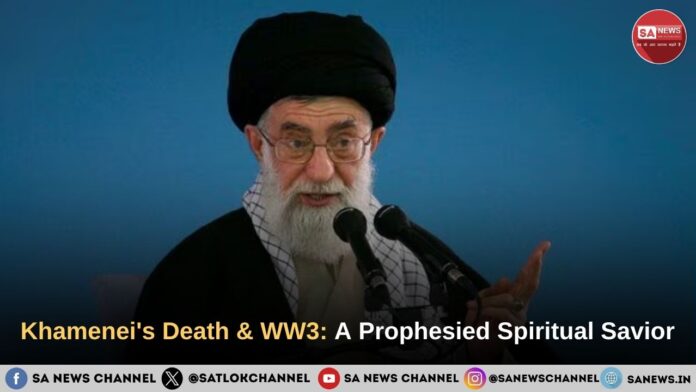

Tehran: Iran’s state television has officially confirmed the death of Ayatollah Ali Khamenei, announcing that the country’s highest authority was killed during coordinated airstrikes carried out by the United States and Israel. A nationwide 40-day mourning period has been declared, marking a historic and deeply volatile moment for the Islamic Republic.
The confirmation follows hours of conflicting reports from Iranian media outlets and international sources. Earlier in the day, US President Donald Trump claimed on his Truth Social platform that the 86-year-old Iranian leader had been killed in what he described as a highly coordinated and intelligence-driven military operation conducted alongside Israel.
Israeli Prime Minister Benjamin Netanyahu had also indicated that there were “growing signs” Khamenei had been eliminated, though official Israeli channels stopped short of initial confirmation.
Key Highlights
1. Iran Confirms Khamenei’s Death After Hours of Conflicting Reports
2. Deadly Airstrikes Across Iran: 24 Provinces Targeted, 201 Killed
3. Post-Khamenei Power Shift: Inside Iran’s Constitutional Succession Process
4. Iran After Khamenei: Constitutional Transition Amid Regional Escalation
5. Iran at a Crossroads: Post-Khamenei Power Struggle and Regional Fallout
6. Khamenei’s Death: A Turning Point in Middle East Geopolitics
Conflicting Reports Before Official Confirmation
In the hours preceding the state broadcast, Iranian news agencies such as Tasnim and Mehr suggested that Khamenei remained “steadfast and firm in commanding the field,” signaling that he was alive and directing national defense efforts.
However, state television later interrupted programming to confirm his death, describing it as a “martyrdom in defense of the nation.” Government officials announced that funeral arrangements would be communicated soon and urged citizens to maintain unity during what they called a “critical and sensitive phase.”
Details of the Attack: Operation Epic Fury
The latest war news reveals that the joint military campaign targeted strategic military zones and leadership compounds across 24 provinces, including Tehran.
- Casualties: Initial reports indicate at least 201 people have been killed in the bombings.
- High-Profile Targets: Alongside the Supreme Leader of Iran, several senior military figures, including Iran defence minister Amir Nasirzadeh (with unconfirmed mentions of former minister Amir Hatami), and top IRGC commanders were reportedly eliminated.
- Airspace Shut Down: Amid the Iran attack, commercial airspace was quickly shut down. Flightradar and Flight Radar 24 showed immediate diversions of flights over Persia and the broader region.
Leadership Vacuum and Constitutional Process
Khamenei had led Iran since 1989, succeeding Ruhollah Khomeini, the architect of the 1979 Islamic Revolution. As Supreme Leader, he held ultimate authority over the armed forces, judiciary, state broadcasting, and key political institutions.
Under Iran’s constitutional framework, the Assembly of Experts is responsible for appointing a new Supreme Leader. Political analysts suggest that an interim leadership council may assume temporary control to ensure continuity of governance.
Also Read- Is Baba Vanga’s WW3 Prediction Turning into Reality?
Barbara Slavin, a senior fellow at the Stimson Center in Washington, told international media that Iran likely had contingency plans prepared. “There will probably be a council set up to run the country. It may already have been functioning behind the scenes,” she noted.
Regional Tensions Escalate
Iran responded to Saturday’s strikes with retaliatory measures that reportedly triggered air-defense activity in multiple Gulf states hosting US military bases, including Kuwait, Qatar, the United Arab Emirates, and Bahrain. While no major damage has been publicly confirmed in those countries, the interceptions underscore the widening scope of the confrontation.
The situation has heightened fears of a broader regional conflict, with global markets reacting nervously to the prospect of instability in one of the world’s most strategically significant regions.
Political Shockwaves Inside Iran
The death of Khamenei represents the most significant political upheaval in Iran in decades. His leadership shaped the country’s domestic and foreign policy direction for more than 35 years, including its nuclear program, regional alliances, and stance toward Western powers.
State officials have called for public demonstrations of solidarity and warned against “foreign interference.” Security forces remain on high alert amid concerns about internal unrest or factional power struggles.
Also Read: 50% US Tariff on India: Trump Hits India Again Over Russian Oil Imports
Iran’s Uncertain Future: Succession Battle and Regional Fallout
With a 40-day mourning period underway, Iran now enters an uncertain transitional phase. Key questions remain:
- Who will emerge as the next Supreme Leader?
- Will hardline factions consolidate control?
- Could the conflict expand into a broader regional war?
- How will global powers respond diplomatically and militarily?
As tensions remain high and military operations reportedly continue, the international community watches closely. The death of Iran’s Supreme Leader marks not just a leadership change, but potentially a turning point in Middle Eastern geopolitics.
Further developments are expected as Tehran clarifies succession plans and as Washington and Tel Aviv outline their next strategic moves.
Who will Stop World War 3? Know what prophecies says
The sudden escalation of conflict in the Middle East following the death of Iran’s Supreme Leader has left the world holding its breath. With nations taking up arms and global tensions reaching a boiling point, the fear of a looming World War 3 is more palpable than ever. But what if the solution to this terrifying geopolitical crisis isn’t found in military strategy or political sanctions, but in a profound spiritual awakening?
The world is currently witnessing the exact turmoil that renowned global foretellers predicted centuries ago. However, alongside the predictions of chaos, they also promised a savior.
Ancient Prophecies Are Becoming True Today
When we look at the rising global conflicts, it’s easy to feel hopeless. Renowned foretellers from across the globe-including Nostradamus from France, Boris Silvgar from Russia, and Cheiro from England-prophesied this exact era of tumult. More importantly, they predicted the emergence of a great spiritual leader from a rural part of India who would rise to save humanity when morality declined.
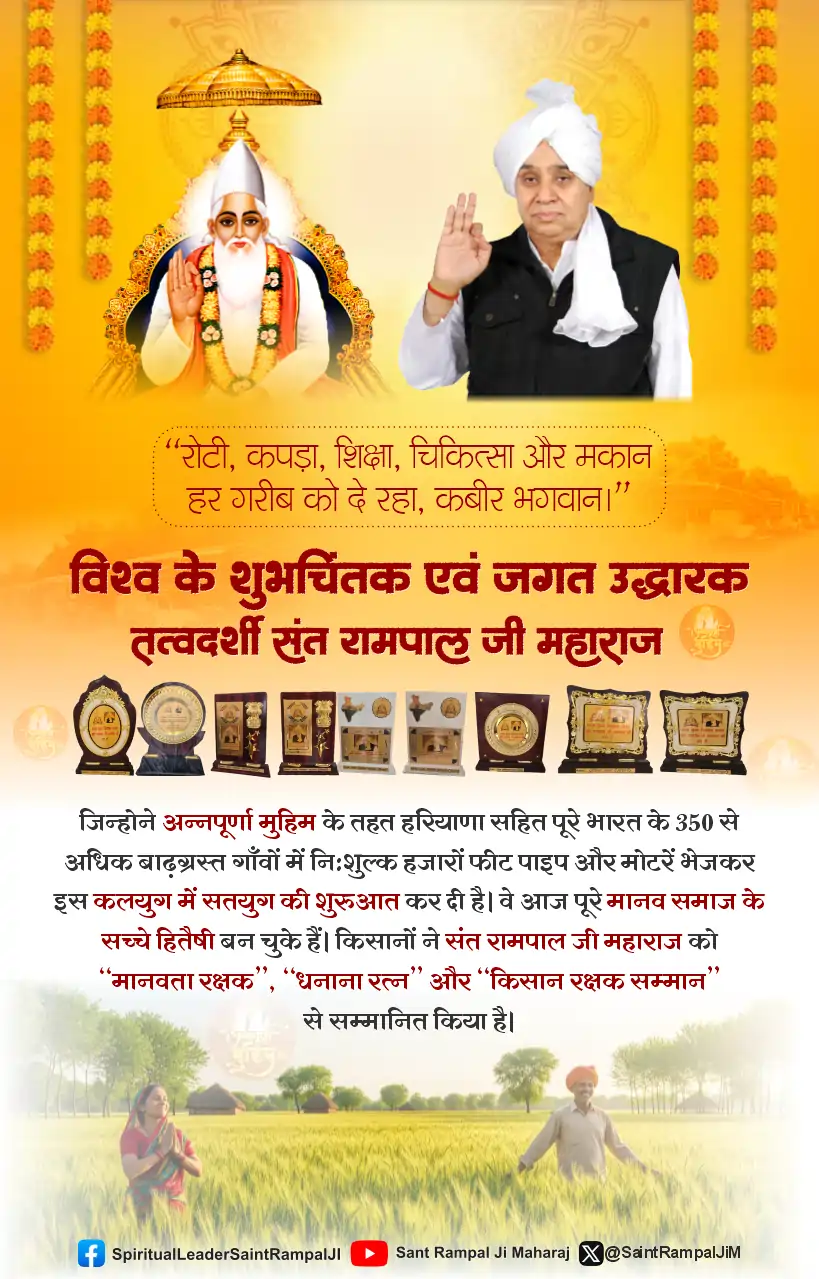
According to these historical predictions, this prophesied world leader is none other than Sant Rampal Ji Maharaj. Foretellers like Nostradamus described a “Chyren” (a supreme religious leader) who would bring about a Golden Age (Ram Rajya) not through weapons or war, but through the immense power of true spiritual knowledge (Tatvgyan) and devotion.
Averting World War 3 Through True Knowledge
As the drumbeats of war grow louder across the Middle East and beyond, the world leader whom all foretellers have discussed, will not let World War 3 happen. The prophecies state that this supreme saint has the divine power to avert global disasters and neutralize the destruction fueled by ignorance.
By imparting authentic spiritual knowledge and revealing the true path of worship, he is actively uniting humanity. He teaches that our true race is “living being” and our religion is “mankind.” His solution to global conflict is a complete transformation of the human soul, stripping away the divisions, hatred, and ego that fuel international wars.
The Vishwa Shanti Sangam Samaroh
To actively counter the dark clouds of global war and bring these prophecies of peace to life, Sant Rampal Ji Maharaj is organizing the Vishwa Shanti Sangam Samaroh (World Peace Gathering) from 1st May to 3rd May 2026. This massive initiative is designed to foster universal brotherhood, completely eradicate societal divisions, and unite a fractured world through true spiritual enlightenment.
While today’s headlines speak of airstrikes, retaliation, and leadership vacuums, the ongoing efforts of Sant Rampal Ji Maharaj remind us that the ultimate defense against a third World War is a united, spiritually awakened world. True peace will not be negotiated on a battlefield, but in the hearts of humanity, guided by the prophesied Savior.
FAQs: Iran Confirms Death of Supreme Leader Ayatollah Ali Khamenei
1. Who was Ayatollah Ali Khamenei?
Ali Khamenei was Iran’s Supreme Leader from 1989 until his reported death in 2026. He was the country’s highest political and religious authority, overseeing the armed forces, judiciary, and major state institutions.
2. How did Khamenei die?
According to Iranian state television, he was killed during coordinated airstrikes allegedly carried out by the United States and Israel across multiple Iranian provinces.
3. Has Iran officially confirmed his death?
Yes. After hours of conflicting reports, Iranian state TV officially confirmed his death and declared a 40-day nationwide mourning period.
4. How many casualties were reported in the strikes?
Iranian sources report at least 201 people killed across 24 provinces, though casualty figures may rise as rescue operations continue.
5. What happens next in Iran’s leadership structure?
Under Iran’s Constitution, the Assembly of Experts is responsible for appointing a new Supreme Leader. An interim leadership council may temporarily govern during the transition.
6. Who can become the next Supreme Leader?
Potential successors are likely to come from senior clerical or political leadership circles. The decision will be made by the Assembly of Experts.