Last Updated on 21 July 2026 IST | Kargil Vijay Diwas 2026: Every year on July 26, Kargil Vijay Diwas is observed to honor the heroes of the Kargil War. The Prime Minister of India pays tribute to the fallen soldiers at the National War Memorial in New Delhi. Commemorative ceremonies are also held at the Kargil War Memorial in Drass and across the country to honor the courage and sacrifice of the Indian Armed Forces.
About Kargil Vijay Diwas
India successfully took command of the high outposts on this date in 1999. The Kargil war lasted about 84 days and ended on the 26th of July 1999. The Pakistani army took advantage of the melting snow and controlled the high outposts of India, betraying the bilateral agreement between the two countries to keep the post unattended over the winter.
The Pakistani army also denied involvement in the war, claiming it was caused by independent Kashmiri rebel forces, but documents left behind by casualties and later, Pakistan’s Army Staff Chief and Prime Minister’s statements revealed that General Ashraf Rashid led the Pakistani paramilitary forces into the war. The Kargil war took the lives of both sides and halted when India regained control of the post and removed the Pakistani Army from the territory.
Kargil Vijay Diwas 2026: Highlights
- On this day 27 years ago, India won the Kargil war by defeating Pakistan.
- The Kargil war lasted about 84 days and ended on July 26, 1999.
- Indian Army has geared up for the events commemorating the 23rd Kargil Vijay Diwas.
The Kargil War (1999) Timeline:
- 3 May 1999 – Pakistani intrusions were first detected in the Kargil sector.
- 5–10 May 1999 – Indian patrols confirmed large-scale infiltration; several soldiers lost their lives during reconnaissance.
- 15–20 May 1999 – The Indian Army mobilized additional troops to evict the intruders.
- 26 May 1999 – India launched Operation Safed Sagar, with the Indian Air Force joining military operations.
- 27 May 1999 – Intense air operations began; India suffered the loss of aircraft and personnel during the campaign.
- 1 June 1999 – Heavy fighting intensified across the Kargil sector.
- 13 June 1999 – The Indian Army recaptured Tololing, marking a major turning point in the war.
- 4–5 July 1999 – Indian forces captured the strategically important Tiger Hill after fierce fighting.
- 11 July 1999 – Pakistan announced the withdrawal of its forces following international pressure.
- 14 July 1999 – India declared that Operation Vijay had entered its final phase.
- 26 July 1999 – India successfully cleared the remaining infiltrators from Indian territory, marking the official victory.
Kargil Vijay Diwas 2026 Celebration
The 27th Kargil Vijay Diwas will be observed on 26 July 2026 to commemorate India’s victory in the 1999 Kargil War and to honor the courage and sacrifice of the brave soldiers who defended the nation’s sovereignty. Commemorative ceremonies are expected to be held at the Kargil War Memorial in Drass, along with tribute events across the country. The Prime Minister is expected to pay homage to the fallen heroes at the National War Memorial in New Delhi. The Kargil War, fought in the challenging high-altitude terrain of Ladakh for nearly 84 days, showcased the extraordinary bravery of the Indian Armed Forces. Operation Vijay, supported by the Indian Air Force’s Operation Safed Sagar, successfully evicted Pakistani intruders from Indian territory. Kargil Vijay Diwas continues to inspire generations with the spirit of patriotism, valor, and selfless service displayed by India’s soldiers.
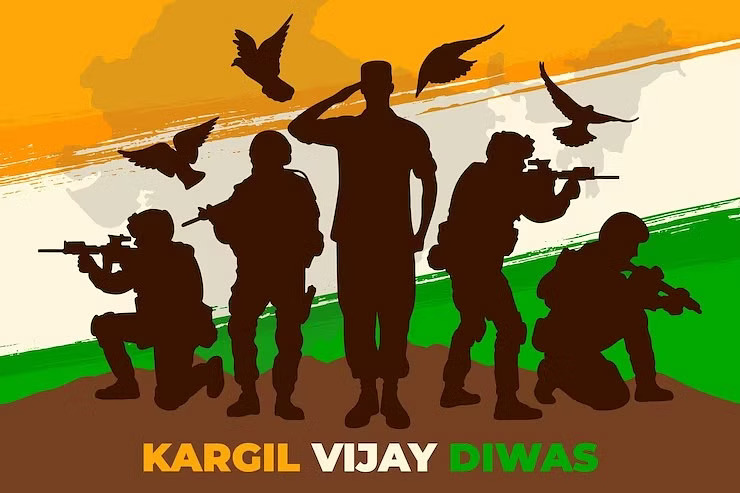
In 2026, commemorative events include a wreath-laying ceremony at the Kargil War Memorial in Drass and nationwide functions honoring fallen soldiers.
The Indian Army is also running a special outreach program, visiting 545 families of war heroes across India and Nepal with letters of appreciation. The Prime Minister typically pays tribute at the Amar Jawan Jyoti in New Delhi.
The Kargil War, fought in extreme high-altitude conditions for over 60 days, highlighted the importance of strong defense and intelligence reforms. Operation Vijay was crucial in driving out Pakistani intruders, with significant contributions from both the Army and the Air Force. Kargil Vijay Diwas stands as a tribute to the courage and sacrifice of India’s soldiers.
This year marks the 26th anniversary of Kargil Vijay Diwas. In Ladakh, the Indian Army held a bike rally from Kumbathang to Randhawa Top to commemorate this occasion on Sunday. Fifty riders took part in the rally, honoring the courageous soldiers who sacrificed their lives during Operation Vijay in 1999. The participants showcased incredible endurance, discipline, and patriotism as they navigated the tough terrain of Ladakh.
This rally is one of many events taking place nationwide to remember the Kargil heroes.
History of Kargil Vijay Diwas: What Led to the Kargil War?
Kargil Vijay Diwas 2026: Following the 1971 Indo-Pakistani War, there had been a long period with relatively few direct armed conflicts involving the military forces of the two neighbors – notwithstanding both nations’ efforts to regulate the Siachen Glacier by ascertaining military outposts on the surrounding mountain ridges and the arising military skirmishes in the 1980s. During the 1990s, however, escalating tensions and conflict in Kashmir, as well as both countries conducting nuclear tests in 1998, contributed to an increasingly belligerent atmosphere.
■ Also Read: Story of Harlal Jaat (Way of Living)
With little knowledge of the nature or scope of the infiltration, Indian troops in the area initially declared that the infiltrators would be evicted within a few days. The Indian army realized that the plan for an attack was much broader after the discovery of infiltration elsewhere in the LOC as well as the differences in tactics used by infiltrators. The total area seized by the ingress is typically estimated to be between 130 and 200 km2.
About Operation Badri
Kargil Vijay Diwas 2026: The Lahore Declaration was signed by both countries in February 1999 to defuse the situation and promised to bring about a peaceful and bilateral solution to the Kashmir conflict. Some elements of the Pakistani Armed Forces were secretly training during the winter of 1998-99 and were sending Pakistani forces and paramilitaries to Indian control line territory (LOC).
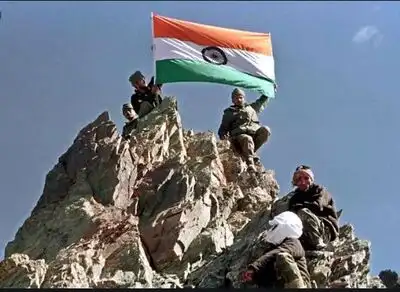
Code was called “Operation Badri.” It sought to divide the Kashmir-Ladakh connection and to make Indian forces withdraw from the Siachen Glacier by forcing India to negotiate an overall settlement of the Kashmir conflict.
■ Read in Hindi: शौर्य और पराक्रम का प्रतीक है कारगिल विजय दिवस (Kargil Vijay Diwas)
Pakistan also believed that any tensions in the region would internationalize and secure a speedy resolution of the Kashmir problem. Another goal might have been, through a proactive role, to boost the morale of the ten-year rebellion in Kashmir. The Indian government responded with Operation Vijay, a mobilization of 200,000 troops. The war officially ended on July 26, 1999, making it Kargil Vijay Diwas. During the war, 527 soldiers of the Indian Army died.
Operation Vijay: India’s Answer to Betrayal
Kargil Vijay Diwas 2026:In 1999, during the Kargil War, the Indian Army initiated “Operation Vijay” to remove Pakistani intruders who had taken over important positions in the Kargil district near the Line of Control. The Pakistani troops, posing as militants, had entered and set up on crucial peaks, threatening India’s essential supply routes.
Operation Vijay demonstrated the collaboration of India’s military forces:
- The Indian Army led the ground offensive,
- The Indian Air Force carried out air missions under “Operation Safed Sagar”,
- The Indian Navy exerted pressure in the Arabian Sea under “Operation Talwar”.
The campaign involved tough high-altitude combat, with Indian soldiers navigating difficult terrain at heights reaching 18,000 feet. Despite facing early challenges and intense shelling from the intruders, the Indian forces fought bravely, slowly reclaiming significant peaks such as Tololing, Tiger Hill, and Point 5140. The operation ended on July 26, 1999, when India successfully regained control of all the occupied areas. Kargil Vijay Diwas is celebrated every year on this date to remember the sacrifices of the soldiers who achieved India’s victory.
Kargil Vijay Diwas 2026: Quotes, Facebook/Whatsapp statuses & Messages
- The wind is not flying our flag, it is flying with each soldier who died protecting it, until the last breath.
- Recalling the Jawans’ sacrifices of the war with Pakistan in 1999 fills our chest with pride and honor.
- Kargil Vijay Diwas reminds us of all the martyrs who sacrificed their lives for the country.
- On the back of their jersey, Real Heroes don’t have a name! They have the flag of their country instead!
- Thanks to the Real Heroes of India! Our families are safe and our children are protected.
- The gallant efforts and sacrifices by the Indian Armed Forces are remembered by Kargil Vijay Diwas every year.
- Kargil Vijay Diwas refreshes the unforgettable triumph of the Indian army back in 1999.
- On this day let us remember the legendary work of the Indian army during the war of Kargil in 1999.
- Salute to all the martyrs of Kargil war 1999, who protected our country’s pride and dignity.
- “Either I will come back after hoisting the Tricolour, or I will come back wrapped in it.” — Captain Vikram Batra, Param Vir Chakra
Kabir Saheb’s Timeless Praise for Virtuous Mothers
Ya Toh Janani Sant Jane, Ya Daani Ya Shoor |
Na Toh Rehle Banjhdi Kyon Vyarth Gavayein Noor ||
Meaning: Kabir Saheb teaches that the true glory of a mother lies in giving birth to a child who benefits humanity. The verse highlights three noble qualities:
- Sant (Saint): The highest ideal is to give birth to a true saint who spreads true spiritual knowledge and guides souls toward salvation.
- Daani (Generous): A person who selflessly helps those in need and uses their wealth and resources for righteous causes.
- Shoor (Brave): A courageous person who protects righteousness, the nation, and the innocent without fear.
The second line, “Na toh rehle banjhdi, kyon vyarth gavayein noor,” is interpreted by Tatavdarshi Sant Rampal Ji Maharaj as emphasizing that the gift of motherhood should be used to nurture children with noble values and virtues. The message is not to demean women without children, but to stress that merely giving birth is not enough, the real purpose is to raise children who become a blessing to society through righteousness, compassion, or spiritual greatness.
In Sant Rampal Ji Maharaj’s discourse, the greatest among these is the Sant, because a true saint shows the path to liberation (moksha) and benefits countless souls.
This explanation reflects Sant Rampal Ji Maharaj’s interpretation of Kabir Saheb’s teachings, in which spiritual upliftment is regarded as the highest purpose of human life.
Presently, Sant Rampal Ji Maharaj ji is imparting complete spiritual knowledge based on the sacred scriptures of all religions. By receiving Naam Initiation (Naam Diksha) from Him and chanting the true salvation mantras, a seeker can overcome the cycle of birth and death and attain the eternal abode, Satlok. To learn more about this spiritual path and the teachings of Sant Rampal Ji Maharaj, download the Sant Rampal Ji Maharaj App from the Google Play Store.
FAQs about Kargil Vijay Diwas
India started commemorating Kargil Vijay Diwas after winning the 1999 war.
On July 26, 1999, the Army pronounced the campaign a success; ever since, the day has been observed as Kargil Vijay Diwas.
The operation of the air force in Kargil war was codenamed as Operation Safed Sagar while Indian army termed its operation as operation Vijay and the code name of the operation of Indian Navy was operation Talwar.
There were between 357 and 453 casualties on the Pakistani side, whereas the official death toll on the Indian side was 527.